Six months ago, I faced a critical decision: build a custom ML model with ML.NET or use cloud APIs. The project required real-time fraud detection with zero latency tolerance. Cloud APIs were too slow. ML.NET was the answer. But when should you use ML.NET vs cloud APIs? After building 15+ production ML systems, here’s what […]
Read more →Category: Cloud Computing
Cloud computing is Internet-based computing, whereby shared resources, software, and information are provided to computers and other devices on demand, as with the electricity grid.
Cloud computing is a natural evolution of the widespread adoption of virtualization, Service-oriented architecture and utility computing. Details are abstracted from consumers, who no longer have need for expertise in, or control over, the technology infrastructure “in the cloud” that supports them.[1] Cloud computing describes a new supplement, consumption, and delivery model for IT services based on the Internet, and it typically involves over-the-Internet provision of dynamically scalable and often virtualized resources.[2][3] It is a byproduct and consequence of the ease-of-access to remote computing sites provided by the Internet.[4] This frequently takes the form of web-based tools or applications that users can access and use through a web browser as if it were a program installed locally on their…
Architecting the Moment: Real-Time Data Processing in Modern Cloud Systems
After two decades of architecting data systems across financial services, healthcare, and e-commerce, I’ve witnessed the evolution from batch-only processing to today’s sophisticated real-time architectures. The shift isn’t just about speed—it’s about fundamentally changing how organizations make decisions and respond to events. This article shares battle-tested insights on building production-grade real-time data processing systems in […]
Read more →AWS re:Invent 2023: Amazon Bedrock and Q Transform Enterprise AI with Foundation Models and Intelligent Assistants
Introduction: AWS re:Invent 2023 delivered transformative announcements for enterprise AI adoption, with Amazon Bedrock reaching general availability and Amazon Q emerging as AWS’s answer to AI-powered enterprise assistance. These services represent AWS’s strategic vision for making generative AI accessible, secure, and enterprise-ready. After integrating Bedrock into production workloads, I’ve found its model-agnostic approach and native […]
Read more →Achieving DevOps Harmony: Building and Deploying .NET Applications with AWS Services
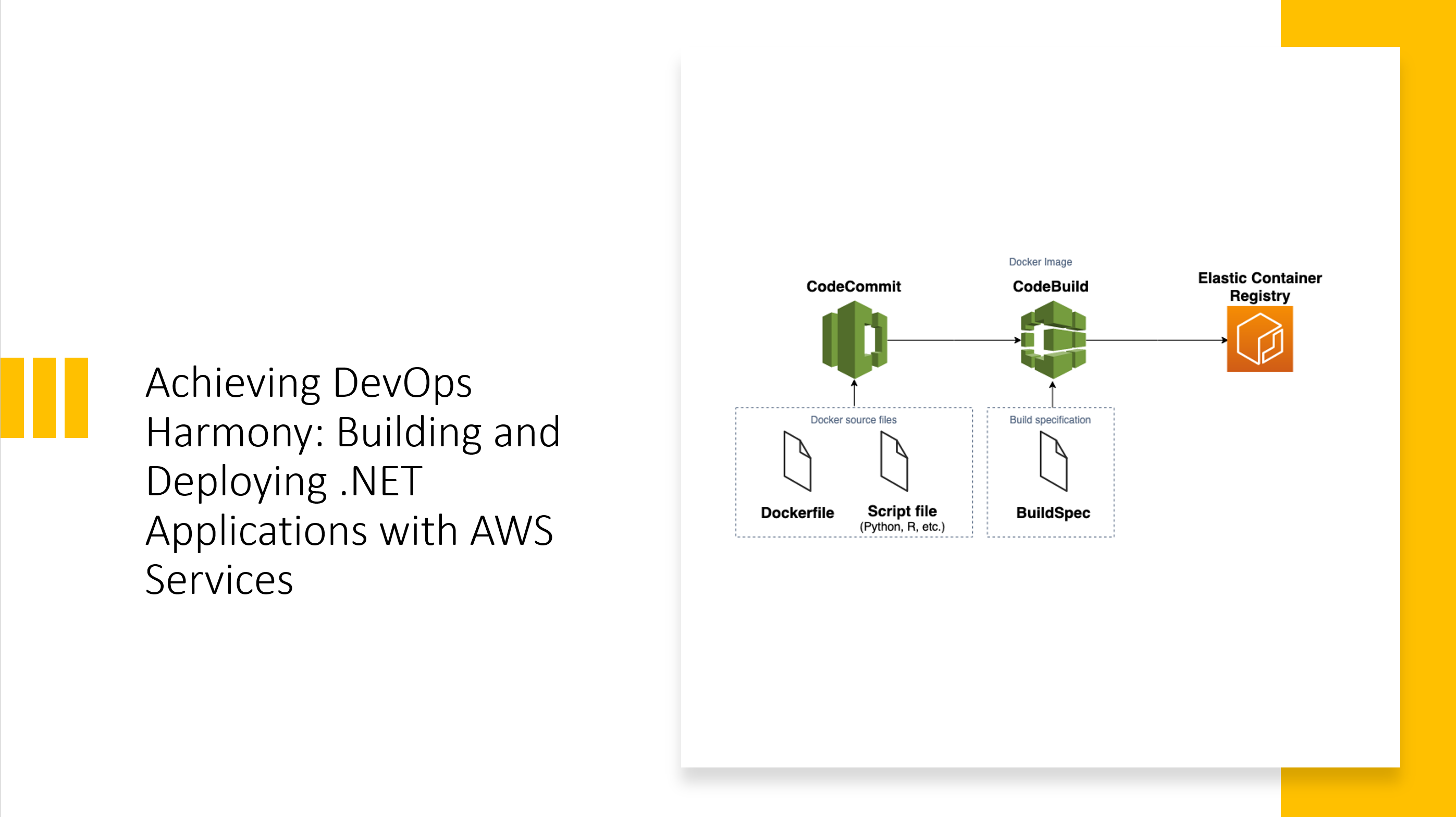
The Evolution of .NET Deployment on AWS After two decades of building enterprise applications, I’ve witnessed the transformation of deployment practices from manual FTP uploads to sophisticated CI/CD pipelines. When AWS introduced their native DevOps toolchain, it fundamentally changed how we approach .NET application delivery. The integration between CodeCommit, CodeBuild, CodePipeline, and ECR creates a […]
Read more →Multi-Cloud AI Strategies: Avoiding Vendor Lock-in
Multi-cloud AI strategies prevent vendor lock-in and optimize costs. After implementing multi-cloud for 20+ AI projects, I’ve learned what works. Here’s the complete guide to multi-cloud AI strategies. Figure 1: Multi-Cloud AI Architecture Why Multi-Cloud for AI Multi-cloud strategies offer significant advantages: Vendor independence: Avoid lock-in to single cloud provider Cost optimization: Use best pricing […]
Read more →AWS DevOps and Infrastructure as Code: CDK, CloudFormation, Terraform, and CI/CD (Part 6 of 6)
Infrastructure as Code (IaC) enables you to manage AWS resources through code, providing version control, repeatability, and collaboration. This guide compares AWS CDK, CloudFormation, and Terraform with production-ready examples. 📚 AWS FUNDAMENTALS SERIES – FINAL PART This is the final part of a 6-part series covering AWS Cloud Platform. Part 1: Fundamentals Part 2: Compute […]
Read more →